
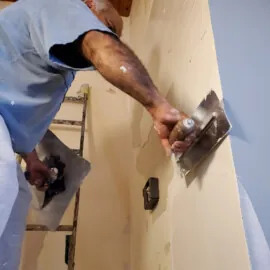
It’s normal for drywall to develop small cracks over time, especially in older homes or areas with shifting foundations. However, when those cracks spread across walls, ceilings, or corners, it’s more than just a cosmetic issue. Deep or widening cracks can signal underlying structural movement, poor installation, or hidden moisture problems.
If your drywall is showing long horizontal or diagonal cracks, it’s time to think beyond surface patching. These usually indicate that the wallboard itself has lost its integrity — a situation where replacement, not repair, is the smarter and more cost-effective solution.
For more insights, check out Common Drywall Repair Issues and How to Fix Them.
1. Persistent Water Damage and Mold Growth
One of the clearest signs you need drywall replacement is water damage. If your drywall has been exposed to leaks from roofs, plumbing, or flooding, it can quickly lose its strength. Water-soaked drywall not only warps and swells but also becomes a breeding ground for mold and mildew — serious health hazards that spread fast.
Even if the wall feels dry later, the internal paper layers may still hold moisture, leading to hidden mold growth. Once mold takes hold, no amount of paint or patching will fix it; full replacement is the only safe solution.
Learn how to spot these early indicators in our guide: Warning Signs of Water-Damaged Drywall in Edmonton Homes.
2. Bubbling or Peeling Paint on Walls
If you’ve noticed paint that bubbles, blisters, or peels, it’s often a symptom of underlying drywall damage. When drywall absorbs moisture or has been patched poorly in the past, it can lose adhesion to the paint layer. While sanding and repainting might seem like an easy fix, the real issue could be deteriorating drywall underneath.
Professional drywall contractors, like at Bakir Contracting, will inspect beneath the surface to determine whether a section needs full sheet replacement or localized patchwork.
3. Sagging or Bulging Walls and Ceilings
Drywall that sags, bulges, or feels soft to the touch is a red flag. This often happens after water damage or due to poor-quality installation where screws or adhesive have failed over time. Sagging ceilings, in particular, pose a safety hazard — they can collapse if left unattended.
In such cases, partial repairs won’t hold up. The only lasting fix is to replace the damaged drywall panels and reinforce them with proper framing and fasteners.
4. Holes Larger Than a Few Inches
Small nail holes or dents are easy DIY fixes. But larger holes — from door handles, accidents, or furniture impacts — often require more than a patch kit. If the hole exceeds 4 to 6 inches, the surrounding drywall may already be weakened.
Replacing the entire section ensures structural stability and creates a seamless surface for painting or finishing. It also prevents uneven textures or visible seams that occur with repeated patching.
5. Repeated Repairs That Don’t Last
If you find yourself repairing the same area again and again, it’s time to take a step back. Repeated cracking or recurring damage often points to underlying foundation shifts, humidity problems, or poor initial installation.
Rather than continuing the repair cycle, full drywall replacement provides a clean slate — ensuring better results and a longer-lasting finish. For homeowners in Edmonton, Bakir Contracting specializes in identifying the root cause before recommending replacement, saving you money in the long run.
6. Smoke, Fire, or Severe Staining
Smoke or fire exposure can permanently damage drywall, leaving behind stains and odors that can’t be painted over. Even if the structure looks intact, microscopic soot particles embed themselves into the drywall layers. This can lead to poor air quality and lingering smells.
Replacement is essential to restore both the aesthetic appeal and the safety of your home.
7. Texture or Surface Irregularities
If your walls appear uneven, with visible waves, ripples, or mismatched textures, it might indicate multiple layers of patching or poor-quality finishing. These inconsistencies can affect the overall look of your space — especially under bright lighting.
A full drywall replacement allows professionals to start fresh, ensuring a smooth, even surface that’s ready for paint or modern wall finishes. For inspiration, check out Modern Wall Finishes That Go Beyond Paint and Drywall.
8. When Repairs Cost More Than Replacement
Sometimes, the deciding factor isn’t visible damage — it’s economics. If multiple rooms or large sections of drywall need patching, taping, and repainting, the combined labour can exceed the cost of replacement.
A professional inspection from Bakir Contracting can help you evaluate whether a full replacement will be more cost-effective and durable than a series of spot repairs.
Why Professional Drywall Replacement Matters?
While small cracks and dents might seem simple enough for a DIY fix, full drywall replacement requires expert precision — from removing damaged panels to sealing joints and ensuring proper insulation.
Professionals not only ensure a seamless finish but also identify hidden issues such as moisture leaks, poor ventilation, or framing weaknesses that may have caused the damage in the first place.
Explore our process in Professional Drywall Repair in Edmonton — Step-by-Step Process by Bakir Contracting.
Conclusion
Drywall is more than just a surface — it’s the backbone of your home’s interior structure. Ignoring early warning signs can lead to bigger, costlier problems down the line. Whether it’s water damage, sagging panels, or persistent cracks, knowing when to replace instead of repair is key to maintaining a safe, beautiful, and durable home.
If you’re unsure about the condition of your drywall, don’t guess — contact Bakir Contracting today for a professional inspection and honest recommendations tailored to your home’s needs.
FAQs
1. Can I replace just one drywall panel instead of the whole wall?
Yes — if the damage is localized, professionals can replace one or two panels without disturbing the rest. However, widespread or structural damage usually requires full-wall replacement.
2. How do I know if drywall damage is from moisture or foundation issues?
Water damage often shows discoloration, softness, or mold, while foundation issues lead to cracks that spread diagonally or horizontally. A professional inspection can confirm the cause.
3. Can moldy drywall be cleaned instead of replaced?
Unfortunately, no. Mold penetrates deep into drywall layers, making cleaning ineffective and unsafe. Replacement is the only long-term solution.
4. How long does drywall replacement take?
For an average-sized room, replacement typically takes 1–3 days, including removal, installation, taping, and finishing.
5. What’s the cost difference between repair and replacement?
Minor repairs are cheaper upfront, but frequent fixes add up. Replacement offers better long-term value by preventing recurring problems.
6. Who should I call for drywall replacement in Edmonton?
Reach out to Bakir Contracting — trusted experts in drywall installation, repair, and replacement across Edmonton and surrounding areas.



0 Comments