
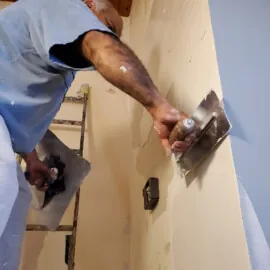
When you walk into a beautifully finished home, one of the first things you notice often without realizing it is the smoothness of the walls. Clean lines, even surfaces, and seamless corners create a polished look that elevates every room. Behind that flawless appearance lies a crucial but often underestimated process: professional drywall taping.
Drywall installation alone does not guarantee smooth walls. The real transformation happens during taping and finishing, where joints are concealed, imperfections are corrected, and surfaces are prepared for paint, texture, or wallpaper. At Bakir Contracting, we know that expert drywall taping is the difference between walls that merely exist and walls that truly enhance your home.
In this blog, we’ll explore why drywall taping matters, what makes professional work superior, common mistakes homeowners encounter, and how expert taping contributes to long-lasting, visually perfect interiors.
What Is Drywall Taping and Why Does It Matter?
Drywall taping is the process of reinforcing and concealing the seams between drywall panels using joint tape and compound. While drywall sheets create the structure of your walls and ceilings, the joints between them are weak points that require reinforcement and careful finishing.
Without proper taping:
-
Seams remain visible through paint
-
Cracks form over time due to settling
-
Corners appear uneven or wavy
-
Light reflects poorly, highlighting flaws
Professional drywall taping creates a continuous, unified surface, making walls appear as though they were constructed from a single, solid plane. This step is essential for achieving paint-ready results and ensuring the durability of your walls.
Why Professional Drywall Taping Is Different from DIY
Many homeowners consider drywall taping a manageable DIY task. While small repairs can be handled independently, full-scale taping requires skill developed through experience.
Professional drywall taping offers:
-
Consistent pressure and compound thickness
-
Proper tape embedding without bubbles
-
Seamless feathering of joints
-
Clean, sharp corners
-
Fewer sanding issues and dust problems
DIY taping often results in uneven seams, over-sanding, or visible ridges that only become more obvious after painting. Once paint goes on, fixing these flaws can require extensive rework or complete drywall replacement. This is why understanding why drywall replacement matters is important when early mistakes compromise long-term performance and appearance.
The Role of Drywall Taping in Overall Home Renovations
Drywall taping is not an isolated task it directly affects the success of your entire renovation project. Whether you’re updating a single room or completing a full remodel, walls serve as the backdrop for everything else.
In kitchen renovations, smooth walls enhance cabinetry, backsplashes, and lighting. During basement remodels, proper taping prevents cracks caused by moisture or temperature changes. In whole-home upgrades, consistent wall finishes create visual continuity from room to room.
That’s why drywall work must be carefully planned alongside other renovation stages, just as outlined in The Process of Kitchen Remodeling.
Common Drywall Taping Mistakes That Ruin Wall Finishes
Improper drywall taping can undermine even the most expensive renovations. Some of the most common mistakes include:
1. Poor Seam Preparation
Dust, loose gypsum, or uneven edges prevent tape from bonding correctly. This leads to bubbling or peeling over time.
2. Incorrect Tape Selection
Using mesh tape in corners or high-stress areas can cause cracking, while improper paper tape application can lead to weak joints.
3. Uneven Compound Application
Applying too much compound creates ridges; too little leaves visible seams. Achieving balance requires practiced technique.
4. Rushing Drying Time
Insufficient drying between coats weakens joints and leads to future cracks.
5. Over-Sanding
Aggressive sanding damages tape and exposes seams, compromising durability.
Many of these issues are discussed in detail in Drywall Installation Mistakes That Can Cost You Later and How to Avoid Them, which highlights how early errors escalate into costly repairs.
Why Corners and Ceilings Require Expert Attention?
Corners and ceilings are the most challenging areas of drywall taping. These locations experience the most stress due to building movement, temperature changes, and gravity.
Professional drywall tapers:
-
Use reinforced paper tape for corners
-
Maintain sharp, straight angles
-
Apply compound evenly on both sides
-
Allow adequate drying time between coats
Ceilings, especially in open-concept homes, demand flawless finishes because light reflects across them. Even minor imperfections become noticeable under natural or recessed lighting.
Layering: The Secret to Perfect Wall Finishes
Professional drywall taping is never a one-step process. It involves multiple layers, each serving a specific purpose:
-
Tape Coat – Embeds the tape and reinforces seams
-
Fill Coat – Levels the joint and conceals the tape
-
Finish Coat – Smooths the surface for final sanding
Each layer is applied wider than the last to create a gradual transition between drywall panels. This technique ensures walls look smooth, not patched.
At Bakir Contracting, we follow this proven layering process to deliver consistent, paint-ready results across all projects.
The Impact of Lighting on Drywall Taping Quality
One reason professional taping is so important is how light interacts with walls. Natural sunlight, LED fixtures, and accent lighting all highlight surface imperfections.
Poorly taped seams may not be visible at first but become glaringly obvious once:
-
Walls are painted with semi-gloss or satin finishes
-
Large windows introduce directional light
-
Feature lighting is installed
This is especially important in modern renovations, where clean lines and smooth finishes are emphasized, as seen in Latest Trends in Edmonton Home Renovations.
Drywall Taping and Long-Term Durability
Beyond appearance, professional drywall taping improves structural durability. Properly reinforced seams:
-
Reduce cracking from building settlement
-
Withstand temperature and humidity changes
-
Minimize future maintenance
-
Extend the lifespan of paint and finishes
In regions with seasonal shifts, like Alberta, walls expand and contract. Expert taping absorbs this movement without visible damage, protecting your investment for years.
How Drywall Taping Affects Paint and Texture Results
Paint can only look as good as the surface beneath it. Even premium paints cannot hide poor drywall taping.
Professionally taped walls:
-
Require fewer paint coats
-
Produce even color absorption
-
Enhance texture consistency
-
Prevent flashing and shadowing
This is especially critical when pairing drywall finishes with flooring upgrades, where visual harmony matters. Similar attention to detail is highlighted in Why Professional Flooring and Carpet Installation Is Essential for a Smooth Finish.
When Should You Choose Professional Drywall Taping?
Hiring professionals is highly recommended when:
-
Completing new construction or major renovations
-
Finishing basements or ceilings
-
Repairing water-damaged drywall
-
Preparing walls for high-end finishes
-
Addressing recurring cracks or seam failures
In these cases, professional taping prevents repeated repairs and ensures long-term satisfaction.
Why Homeowners Trust Bakir Contracting for Drywall Finishing
At Bakir Contracting, drywall taping is treated as a precision craft not a rushed task. Our team understands that flawless walls are the foundation of beautiful interiors.
We focus on:
-
Thorough surface preparation
-
Proper material selection
-
Controlled application techniques
-
Clean, consistent results
-
Seamless coordination with other renovation phases
Our drywall services integrate smoothly with broader renovation planning, supported by our proven approach to seamless project management for your home.
Final Thoughts
Drywall taping may be hidden beneath paint, but its impact is impossible to ignore. From smooth finishes and crisp corners to durable, crack-resistant walls, professional drywall taping sets the standard for quality interiors.
Whether you’re renovating a kitchen, finishing a basement, or upgrading your entire home, investing in expert drywall taping ensures results that look better, last longer, and add real value to your space.
If you’re aiming for walls that truly elevate your home, trust the professionals at Bakir Contracting to deliver flawless finishes done right the first time. Contact us today!
FAQs
1. Why is professional drywall taping important?
A. Professional drywall taping ensures that joints between drywall panels are properly reinforced and concealed, creating smooth, seamless walls. Expert taping prevents visible seams, cracking, and uneven surfaces, resulting in walls that look polished and hold up well over time.
2. What happens if drywall taping is done incorrectly?
A. Improper drywall taping can lead to cracks, bubbling tape, uneven joints, and visible lines after painting. These issues often become more noticeable over time and may require costly repairs or even drywall replacement if not addressed correctly.
3. Can drywall taping affect how paint looks on the walls?
A. Yes, drywall taping directly impacts paint quality. Poorly taped seams can show through paint, especially under bright lighting or with glossy finishes. Professionally taped walls allow paint to apply evenly, improving color consistency and overall appearance.
4. How many coats are needed for proper drywall taping?
A. Typically, professional drywall taping involves three coats: a tape coat to embed the tape, a fill coat to level the joint, and a finish coat to create a smooth, paint-ready surface. Each coat must dry fully before the next is applied for best results.
5. Is drywall taping necessary for small repairs?
A. Yes, even small drywall repairs require proper taping to ensure durability and a smooth finish. Skipping or rushing the taping process can cause cracks or visible patches, making the repair stand out rather than blend seamlessly with the wall.
6. How long does drywall taping take to complete?
A. The timeline depends on the size of the project, drying time between coats, and environmental conditions. Most drywall taping projects take several days to complete to allow for proper drying, sanding, and finishing.
7. What areas of the home require the most attention during drywall taping?
A. Corners, ceilings, and high-traffic areas require extra care during drywall taping. These areas are more prone to movement and stress, making professional techniques essential to prevent future cracking or separation.
8. Should I hire professionals for drywall taping during renovations?
A. Hiring professionals is highly recommended, especially for large renovations, kitchens, basements, and areas with complex corners or lighting. Professional drywall taping ensures consistent quality, saves time, and reduces the risk of future repairs.



0 Comments